
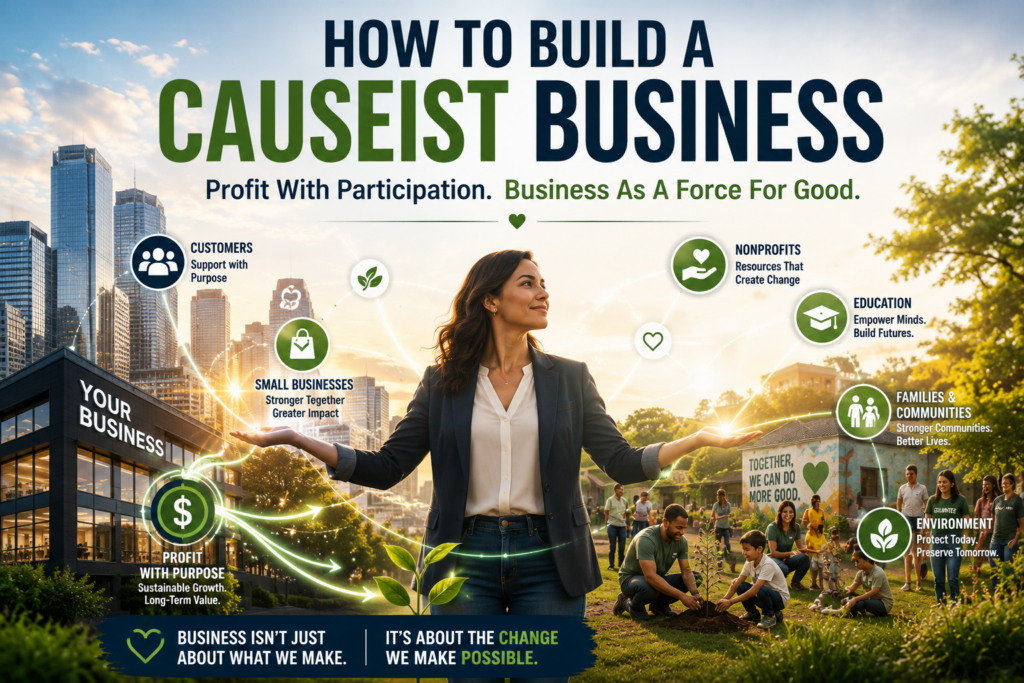
A Causeist business is built on a simple idea: commerce should create more than profit.
It should create purpose.
Traditional businesses usually treat giving as something that happens after success. A company makes money, then later decides whether to donate, sponsor, or support a cause. Causeism challenges that model. Instead of separating profit from impact, a Causeist business builds giving directly into the transaction itself.
Every sale becomes an opportunity to do good.
Every customer becomes part of the mission.
Every purchase helps move money toward a cause that matters.
If you want to build your own Causeist business, here is a practical step-by-step guide.
Step 1: Define the Cause Behind the Business
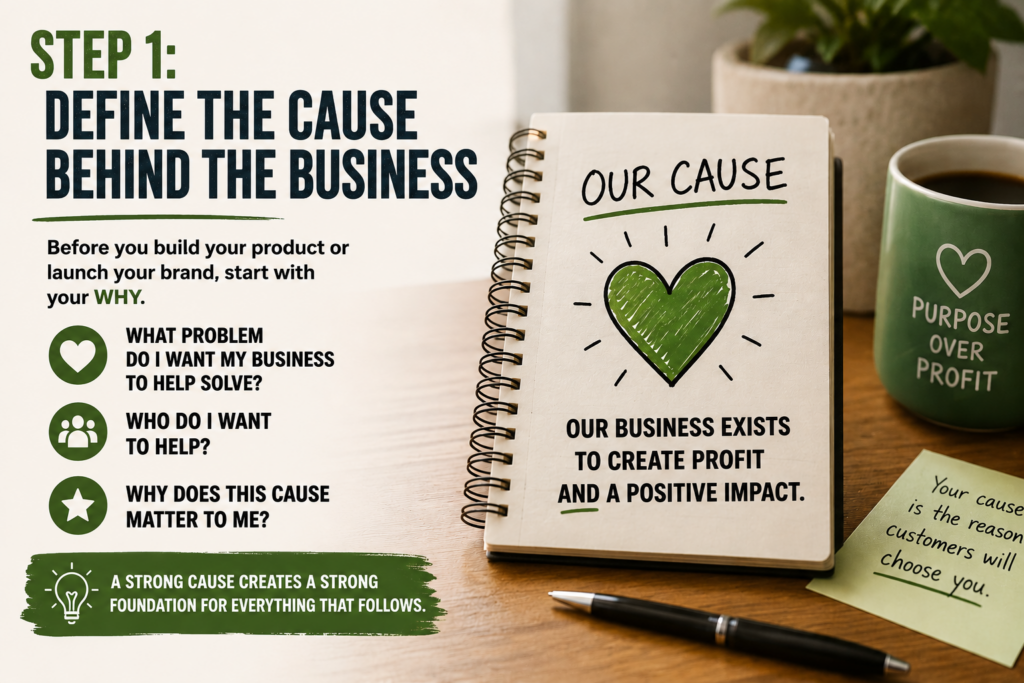
Before choosing a product, designing a logo, or launching a website, start with the cause.
Ask yourself:
What problem do I want my business to help solve?
Who do I want to help?
Why does this cause matter to me?
A strong Causeist business needs a cause that feels authentic. Customers can tell when purpose is being used as a marketing gimmick. The cause should connect to the founder, the product, the community, or the values of the brand.
For example, a clothing company might support youth homelessness. A coffee company might support clean water. A financial education company might support scholarships. A pet brand might support animal shelters.
The cause does not need to be complicated. It needs to be real.
Step 2: Choose a Clear Giveback Model
Once you know your cause, decide how your business will support it.
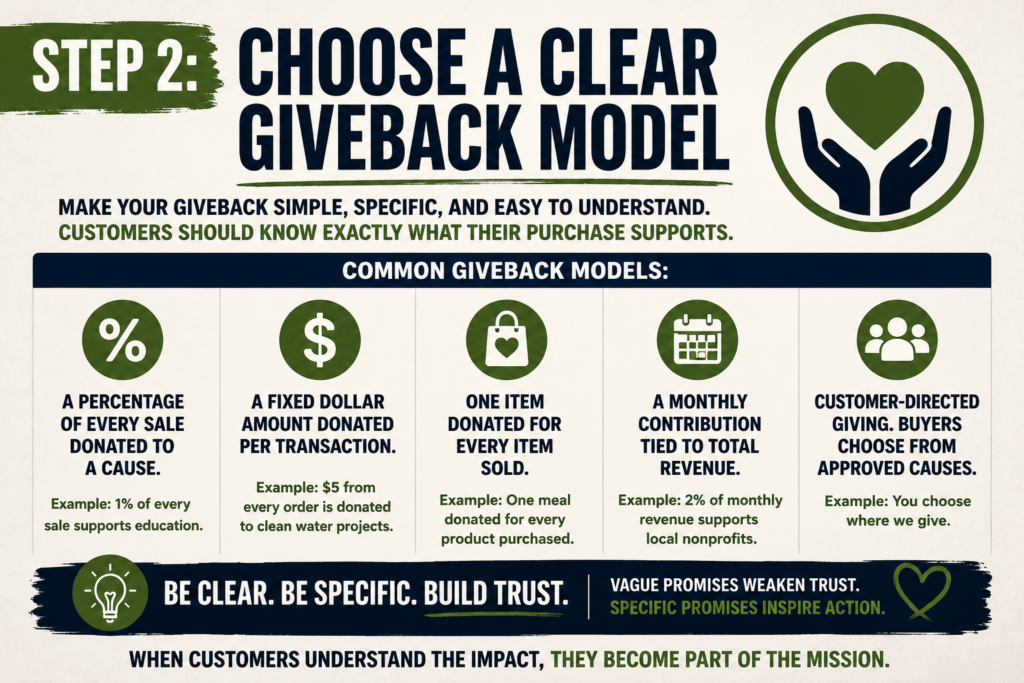
A Causeist business should make the giveback simple and easy to understand. Customers should know exactly what happens when they make a purchase.
Common models include:
A percentage of every sale donated to a cause.
A fixed dollar amount donated per transaction.
One item donated for every item sold.
A monthly contribution tied to total revenue.
Customer-directed giving, where buyers choose from approved causes.
The key is clarity.
Do not say, “A portion of proceeds goes to charity” unless you clearly define what that portion is. Vague giving language weakens trust. Specific giving language builds confidence.
A stronger example would be:
“Every purchase helps fund one meal for a family in need.”
Or:
“1% of every transaction supports student scholarships.”
Or:
“$5 from every membership goes directly to veteran mental health programs.”
The more specific the promise, the stronger the trust.
Step 3: Build Giving Into the Price
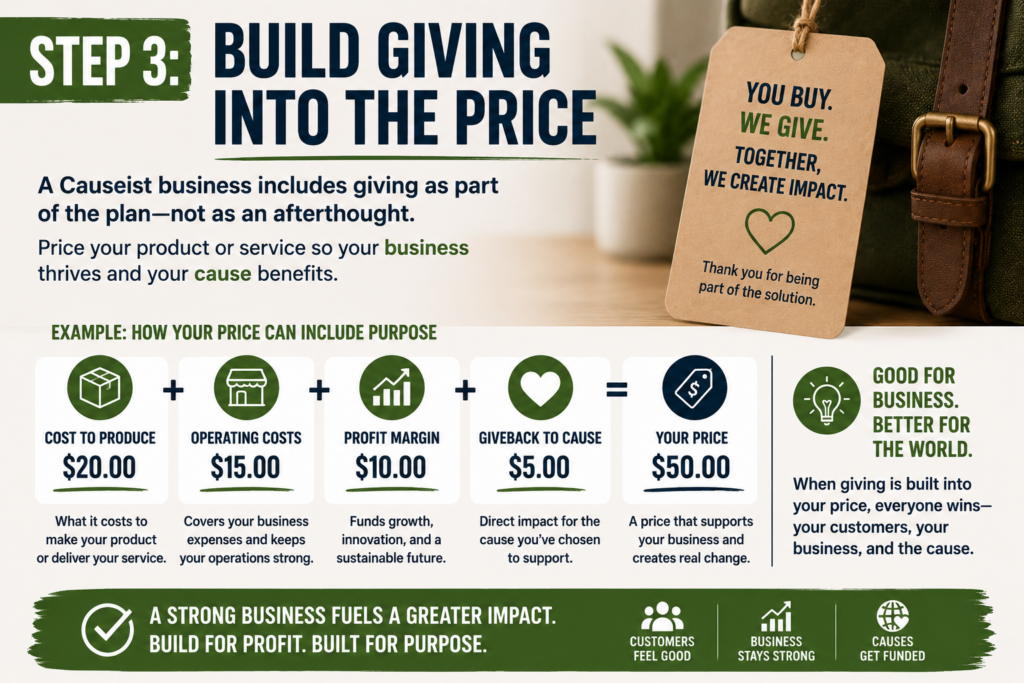
Causeism works best when giving is built into the business model from the beginning.
Many companies make the mistake of treating giving as an extra expense. That creates tension between profit and purpose. A Causeist business should price its products or services so the giveback is already included.
This means understanding your numbers. What does the product cost to produce?What are your operating expenses? What profit margin do you need? What amount can you consistently give without damaging the business?
A Causeist company must remain financially healthy. If the business fails, the cause loses its support. Profit is not the enemy of purpose. Profit is what makes purpose sustainable.
Step 4: Choose the Right Nonprofit or Cause Partner
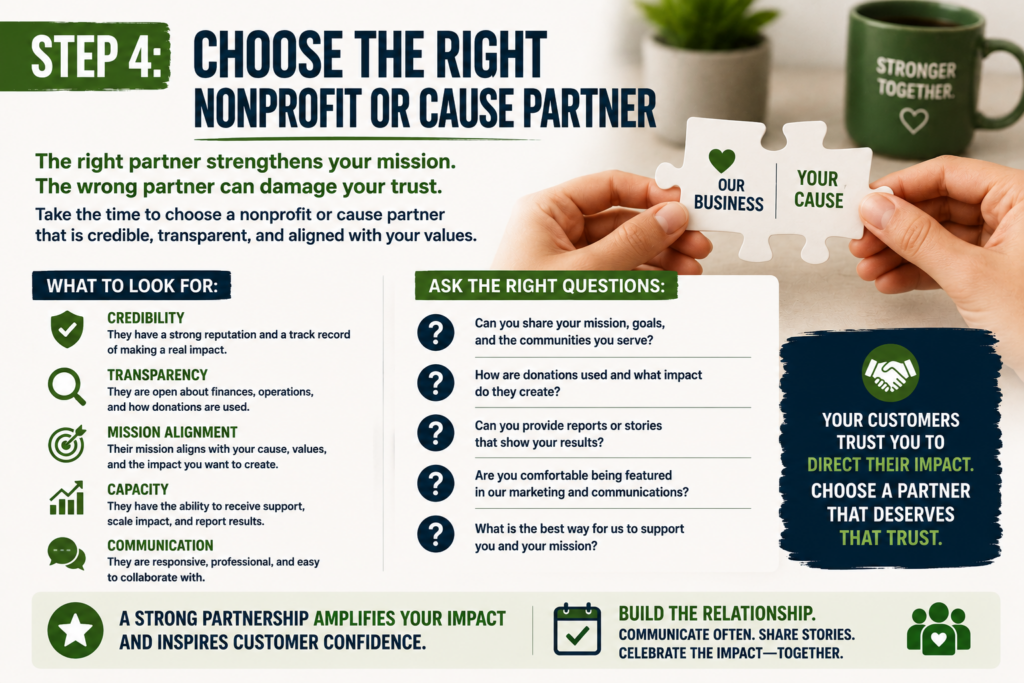
If your business is donating money, products, or services, choose your partners carefully.
Look for organizations that are credible, transparent, and aligned with your mission. Make sure they are capable of receiving support, reporting impact, and maintaining a professional relationship.
Before promoting a nonprofit partnership, reach out and confirm that the organization is comfortable being named in your marketing. Some nonprofits have guidelines around logo use, donation claims, and public campaigns.
This step matters.
Your customers are trusting you to direct money responsibly. Your cause partner should strengthen that trust.
Step 5: Make the Impact Visible
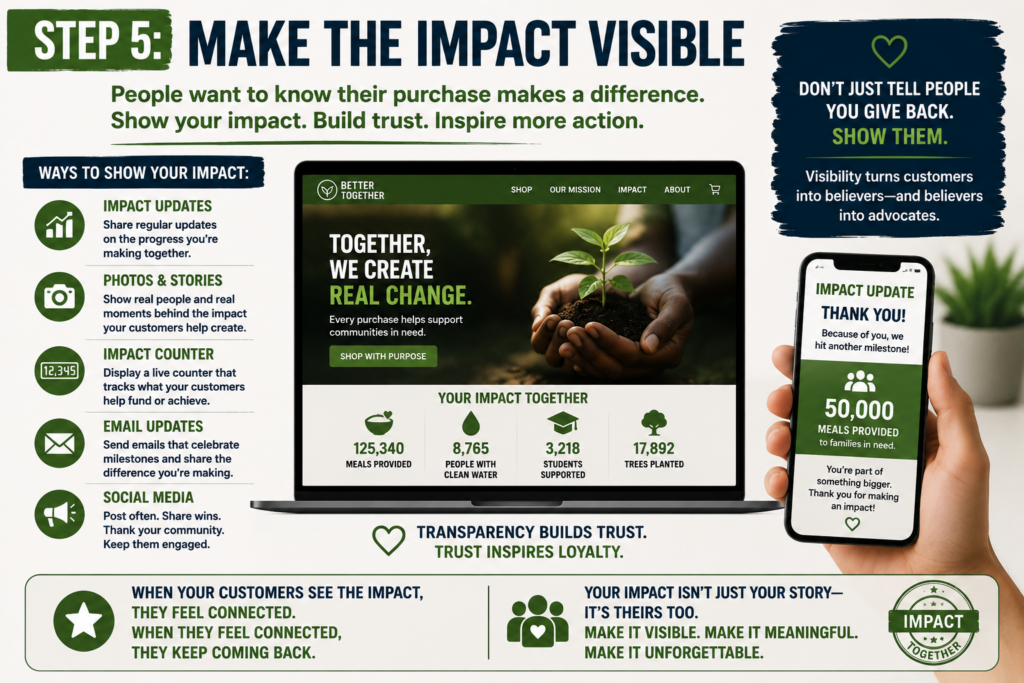
A Causeist business should not hide its impact. Show customers what their purchases are helping create.
This can be done through:
Monthly impact updates.
Donation receipts.
Photos or stories from the cause partner.
A running impact counter on the website.
Customer emails explaining what was funded.
Social media posts showing milestones.
The goal is not to brag. The goal is to create transparency. People want to know that their purchases matter. When customers see the impact, they feel more connected to the brand and more likely to participate again.
Step 6: Let Customers Participate in the Mission
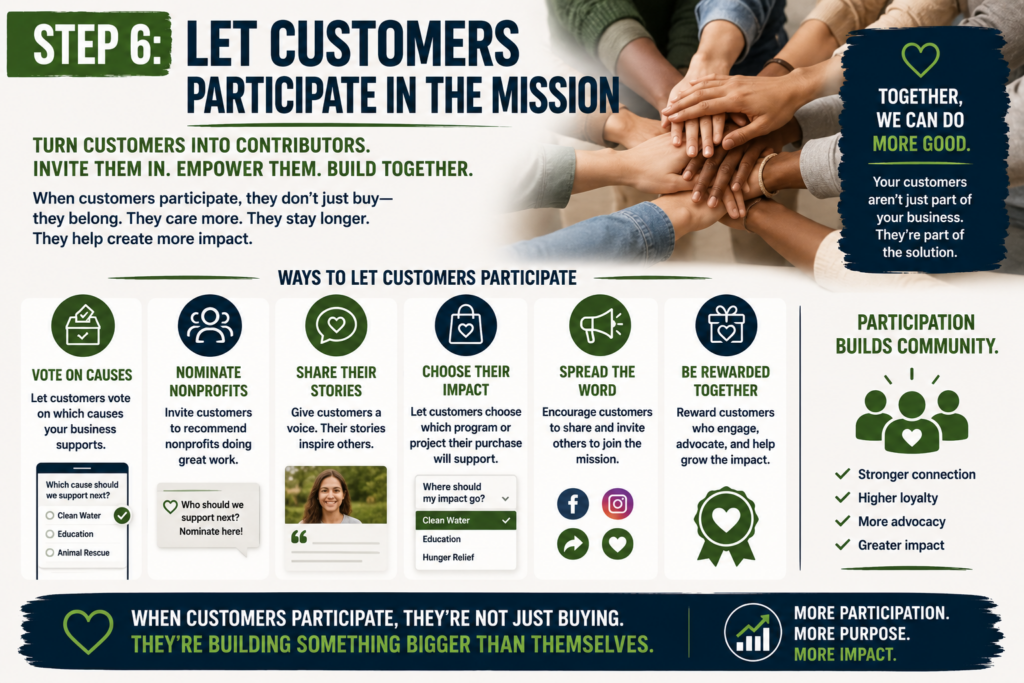
A Causeist business should make customers feel like contributors, not just consumers. Instead of saying, “We donated,” say, “Together, our customers helped fund…” That small language shift matters. It turns a transaction into participation.
You can also invite customers to vote on causes, nominate nonprofits, share personal stories, or choose which campaign their purchase supports. The stronger the participation, the stronger the community.
Step 7: Tell the Story Clearly
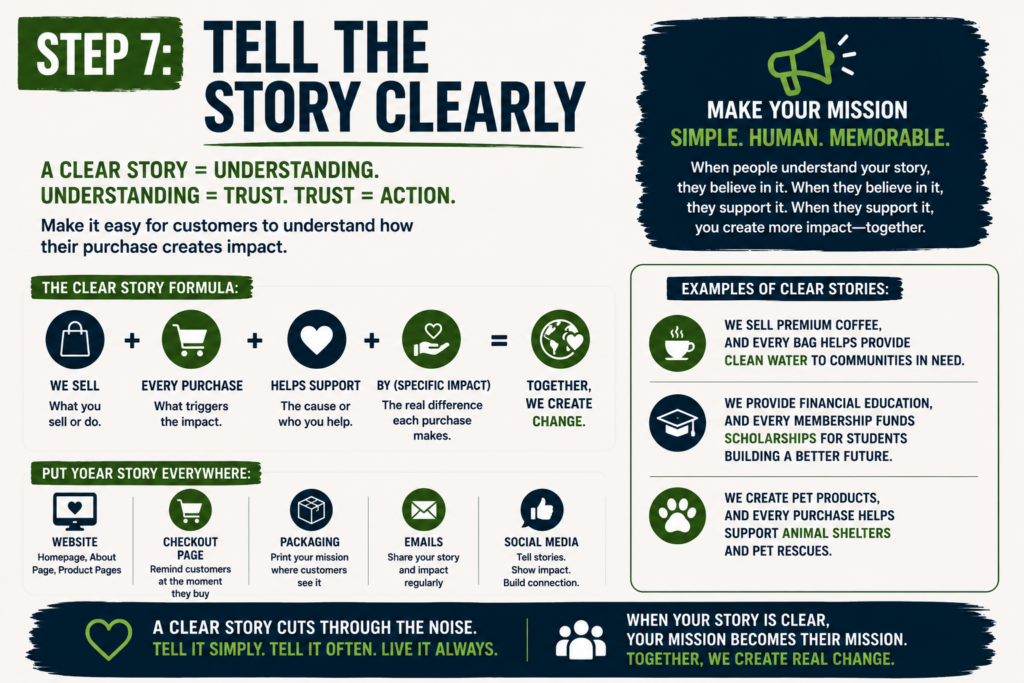
Your business needs a simple explanation of its Causeist model.
A good formula is:
“We sell [product/service], and every purchase helps support [cause] by [specific impact].”
Example:
“We sell premium coffee, and every bag helps fund clean water projects for communities in need.”
Or:
“We provide financial education, and every membership helps fund scholarships for students who want to build a better future.”
This message should appear on your website, product pages, checkout page, emails, packaging, and social media. If people do not understand the mission quickly, they may miss it entirely.
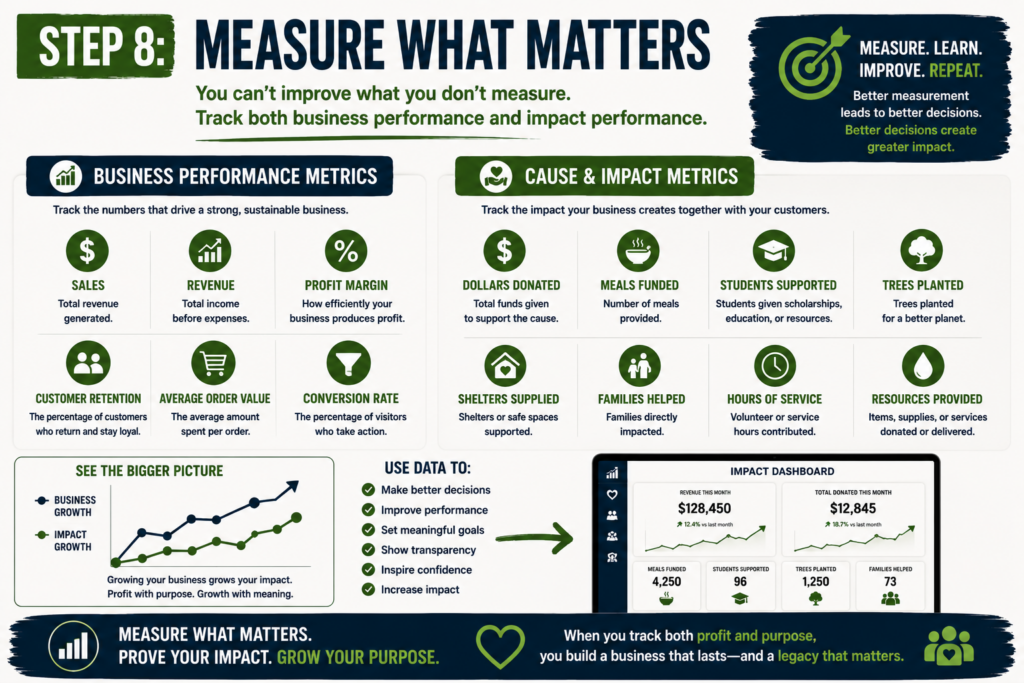
Step 8: Measure What Matters
Causeist businesses should track both business performance and impact performance.
Important business metrics include:
Sales.
Revenue.
Profit margin.
Customer retention.
Average order value.
Conversion rate.
Important cause metrics include:
Dollars donated.
Meals funded.
Students supported.
Trees planted.
Shelters supplied.
Families helped.
Hours of service provided.
Tracking both sides helps prove that purpose and profit can work together.
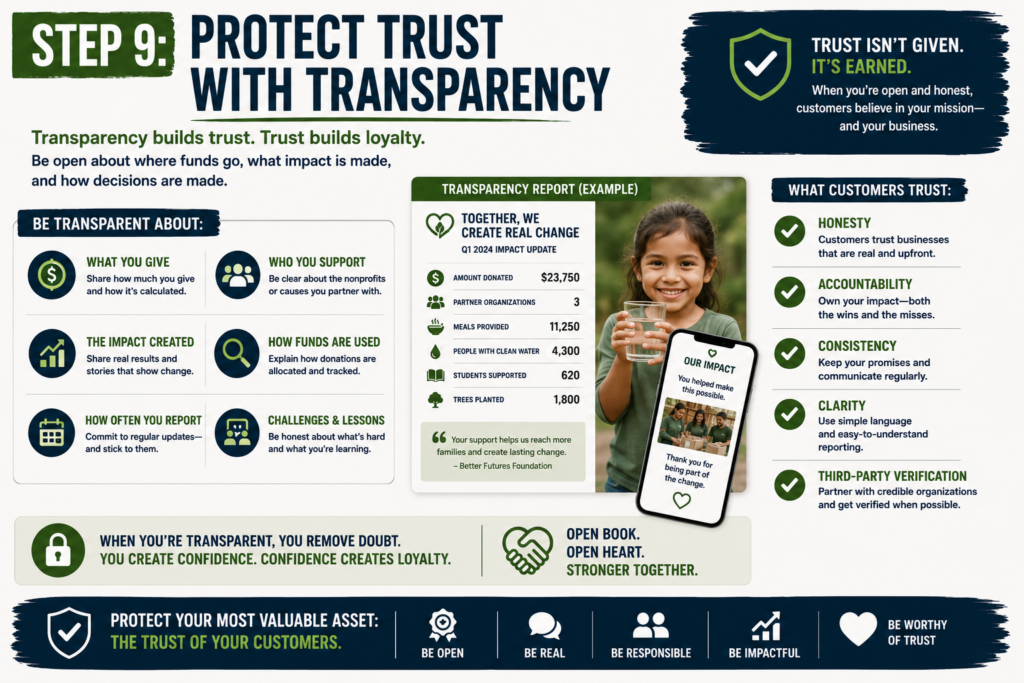
Step 9: Protect Trust With Transparency
Trust is the foundation of a Causeist business. If you promise to give, you must follow through. Publish updates regularly. Be honest when goals are missed. Do not exaggerate impact. Do not imply that every dollar goes to charity if it does not.
Customers do not expect perfection. They expect honesty.
A Causeist business should be proud of both its profit and its purpose. The goal is not to pretend the company is a nonprofit. The goal is to show that business can generate revenue while also contributing to something meaningful.
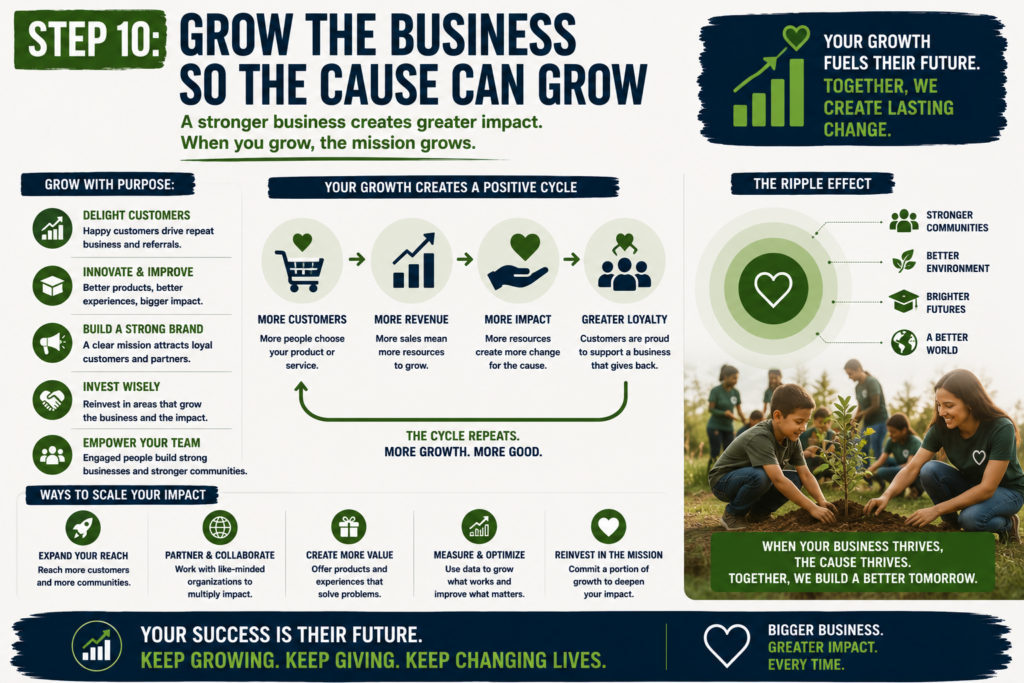
Step 10: Grow the Business So the Cause Can Grow
A Causeist business should want to grow. The larger the business becomes, the larger the impact can become. This is one of the most important ideas behind Causeism. Profit and purpose do not have to compete. When designed correctly, they can strengthen each other.
More customers means more transactions. More transactions means more giving. More giving means more impact. A Causeist business does not apologize for success. It uses success as fuel for a greater mission.
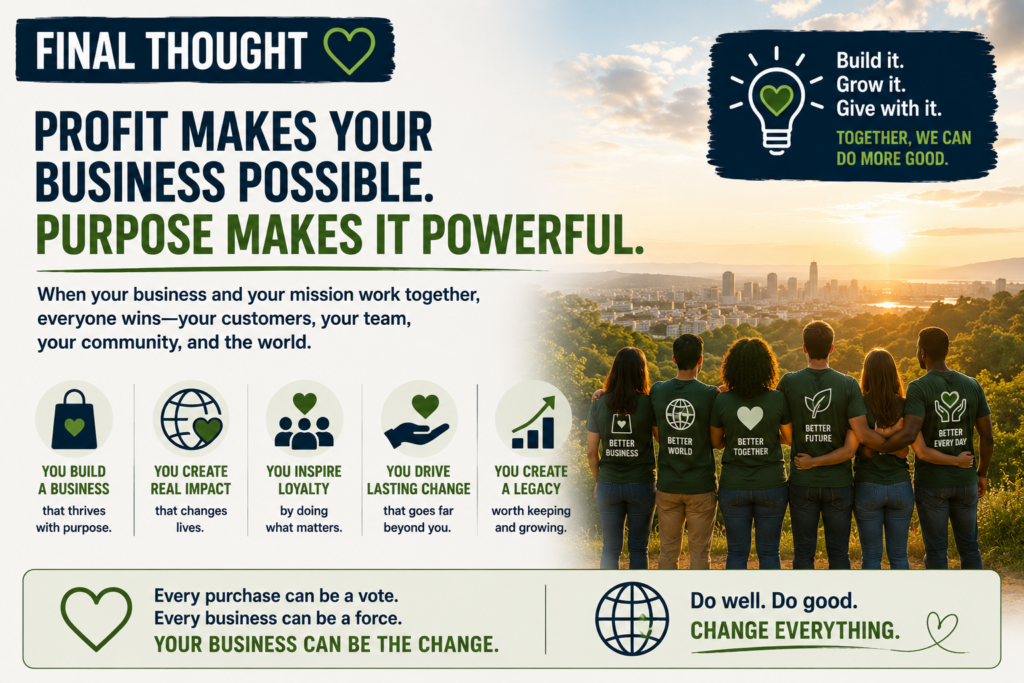
Final Thought
Starting a Causeist business does not require you to be a billionaire, a large corporation, or a global brand. It begins with a decision. You decide that your business will not only sell something. It will stand for something. You decide that profit will not be the end of the transaction. It will be the beginning of impact. That is the heart of Causeism.
Commerce with purpose.
Profit with participation.
Business as a force for good.