For years, I’ve been trying to answer a simple question:
What is capitalism, really?
Not the political version. Not the ideological arguments.
Just the reality of how it actually works—and how it keeps changing.
Because the truth is, capitalism has never been static.
It evolves.
And right now, we’re in the middle of another shift.
The Problem No One Agrees On
One of the biggest things I’ve noticed—both in research and real-world conversations—is this:
People don’t even agree on what capitalism is.
Some define it as markets.
Others say it’s about private ownership.
Some see it as freedom.
Others see it as inequality.
But when a system is this misunderstood, something important is happening:
It’s changing.
Capitalism Has Always Evolved
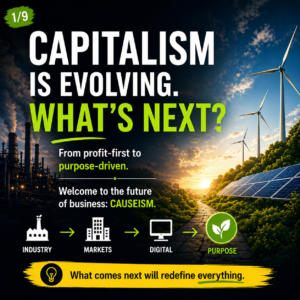
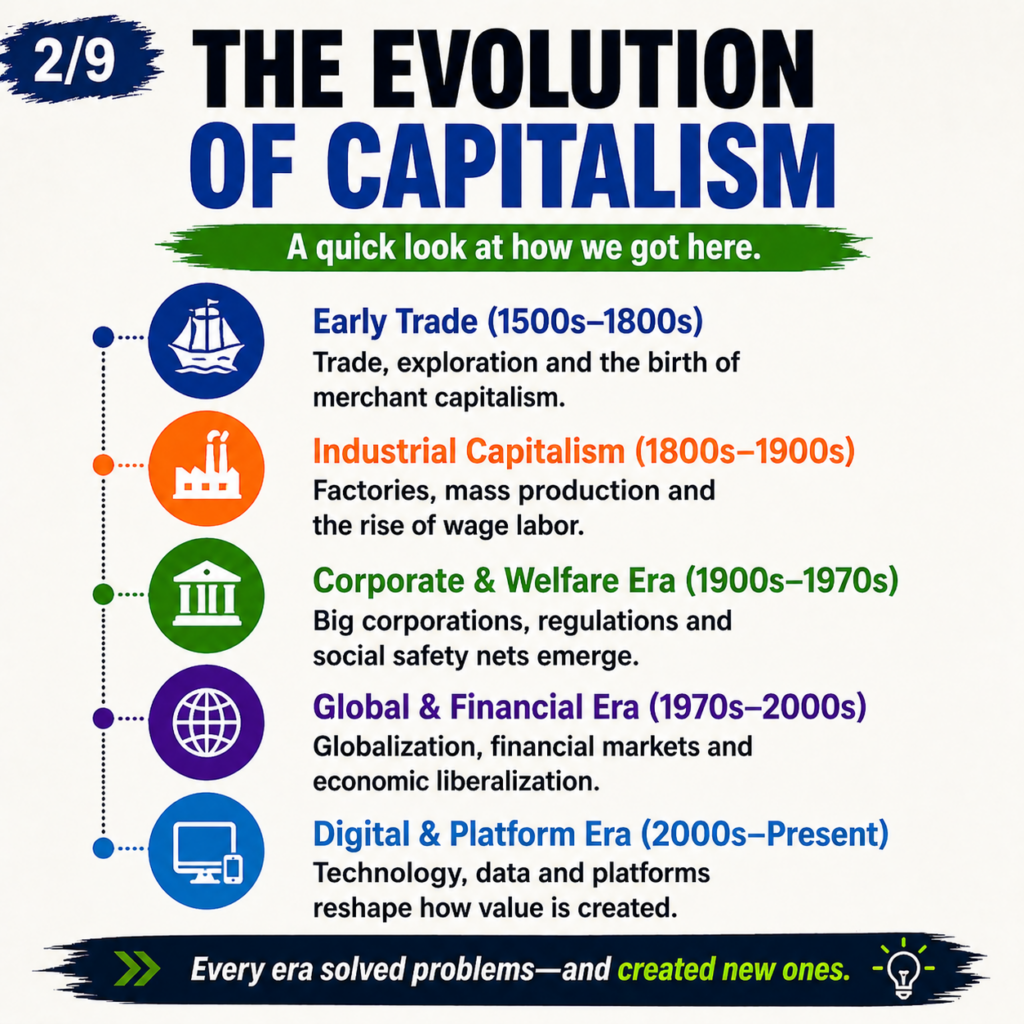
If you zoom out, you can see clear stages:
- Early trade economies
- Industrial capitalism
- Corporate and welfare systems
- Global financial markets
- Digital and platform economies
Each stage solved problems—and created new ones.
That’s the pattern.
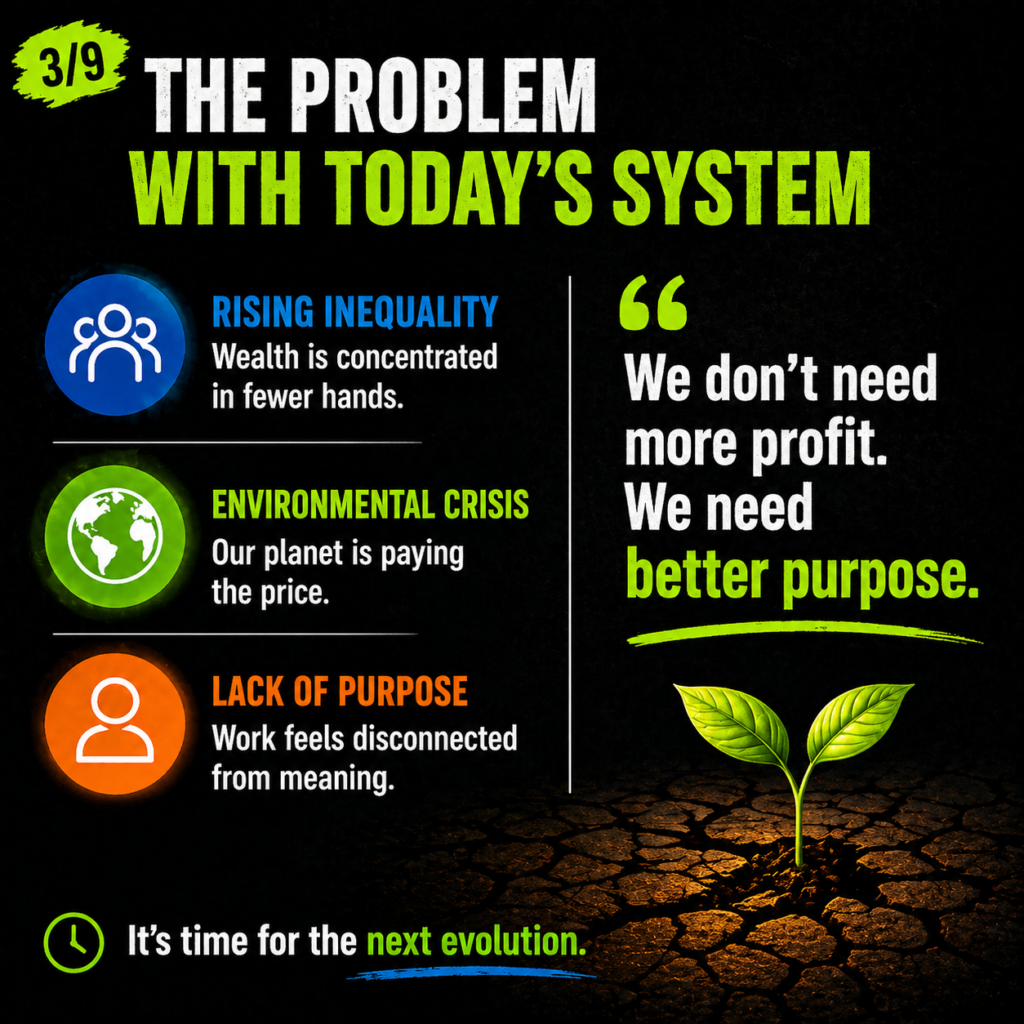
And today, the problems are becoming harder to ignore:
- Growing inequality
- Environmental pressure
- Lack of purpose in business
What I Started to Notice
As I dug deeper—and as I’ve worked on real-world initiatives through projects like the Goat Foundation—I kept coming back to one idea:
Businesses are incredibly powerful tools.
But most of them are designed with one primary goal:
Profit first.
And while that system has driven massive innovation, it also leaves a gap:
What happens when profit and impact aren’t aligned?
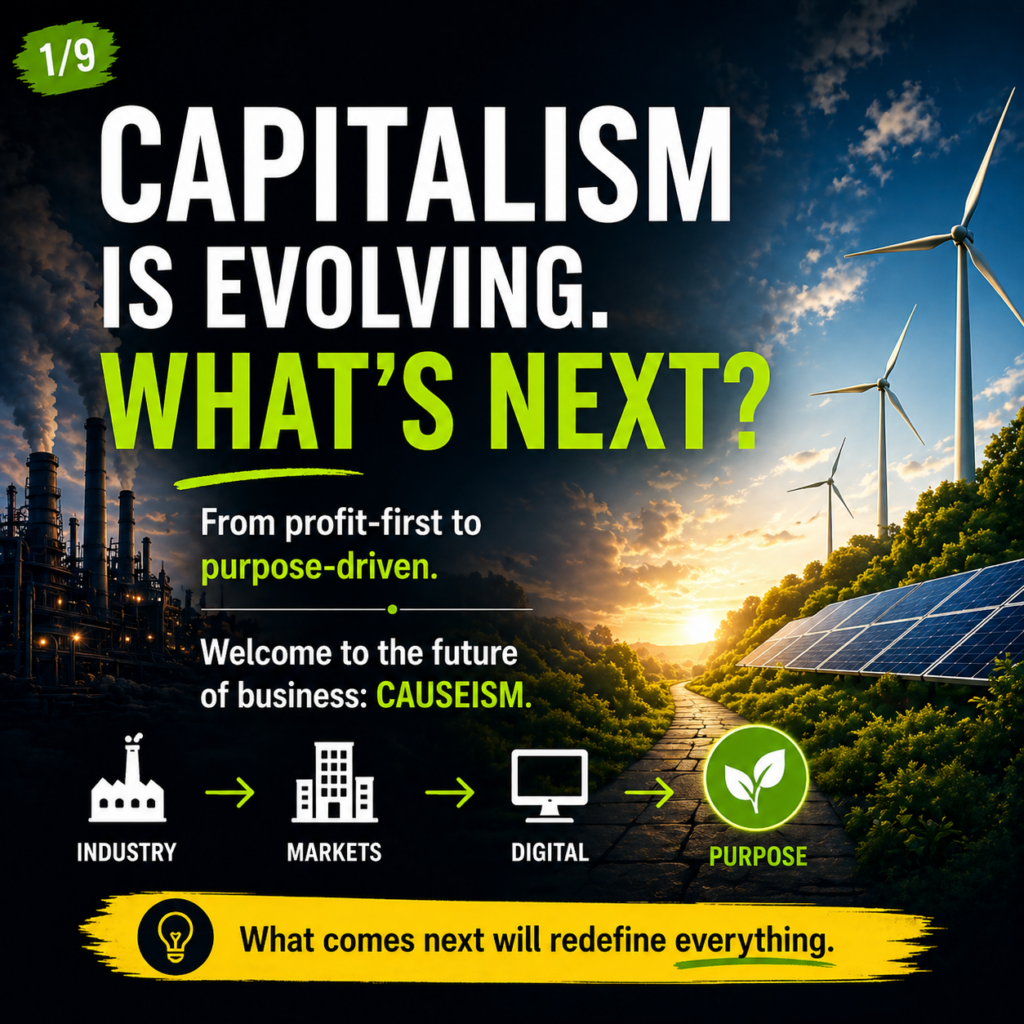
The Shift: From Profit to Purpose
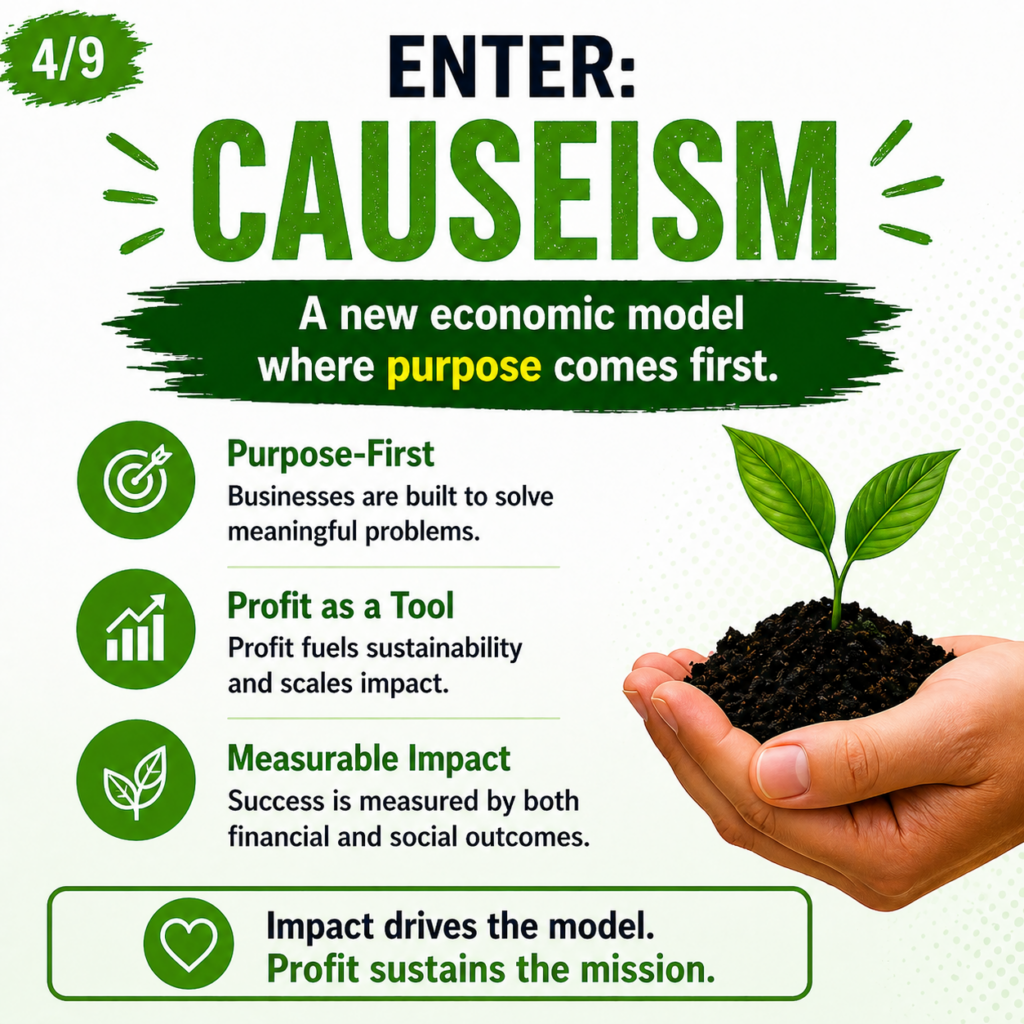
This is where I believe the next evolution is happening.
Not replacing capitalism—but evolving it.
From:
Profit-first models
To:
Purpose-driven systems
Where businesses are built not just to generate revenue—but to solve real problems.
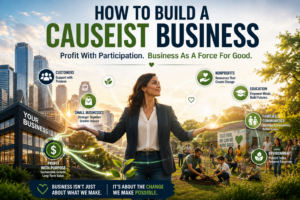
What Is “Causeism”?
I’ve started calling this idea:
Causeism
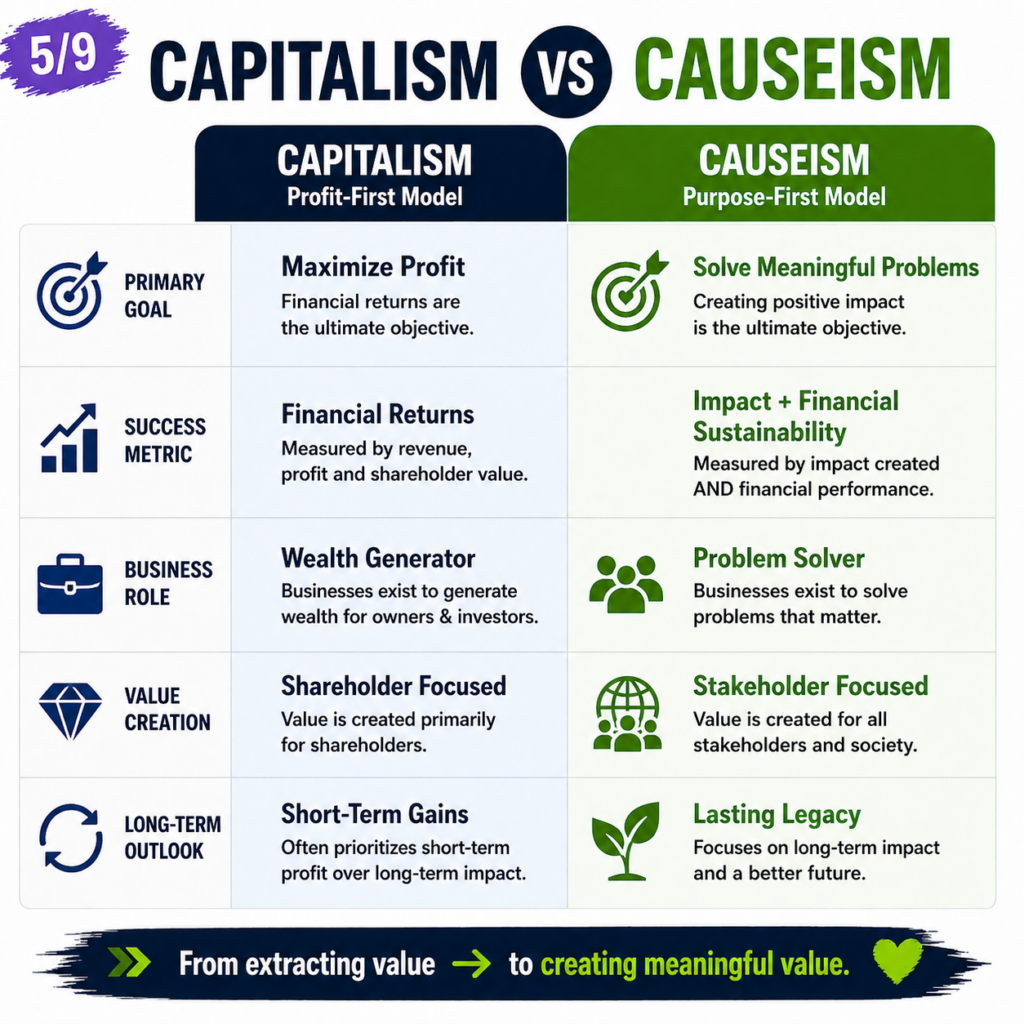
At its core, Causeism flips the starting point:
- Capitalism: Profit → Impact (if any)
- Causeism: Impact → Profit (required for sustainability)
In this model:
- Purpose isn’t marketing
- It isn’t a side initiative
- It’s the foundation of the business itself
This Isn’t Just Theory
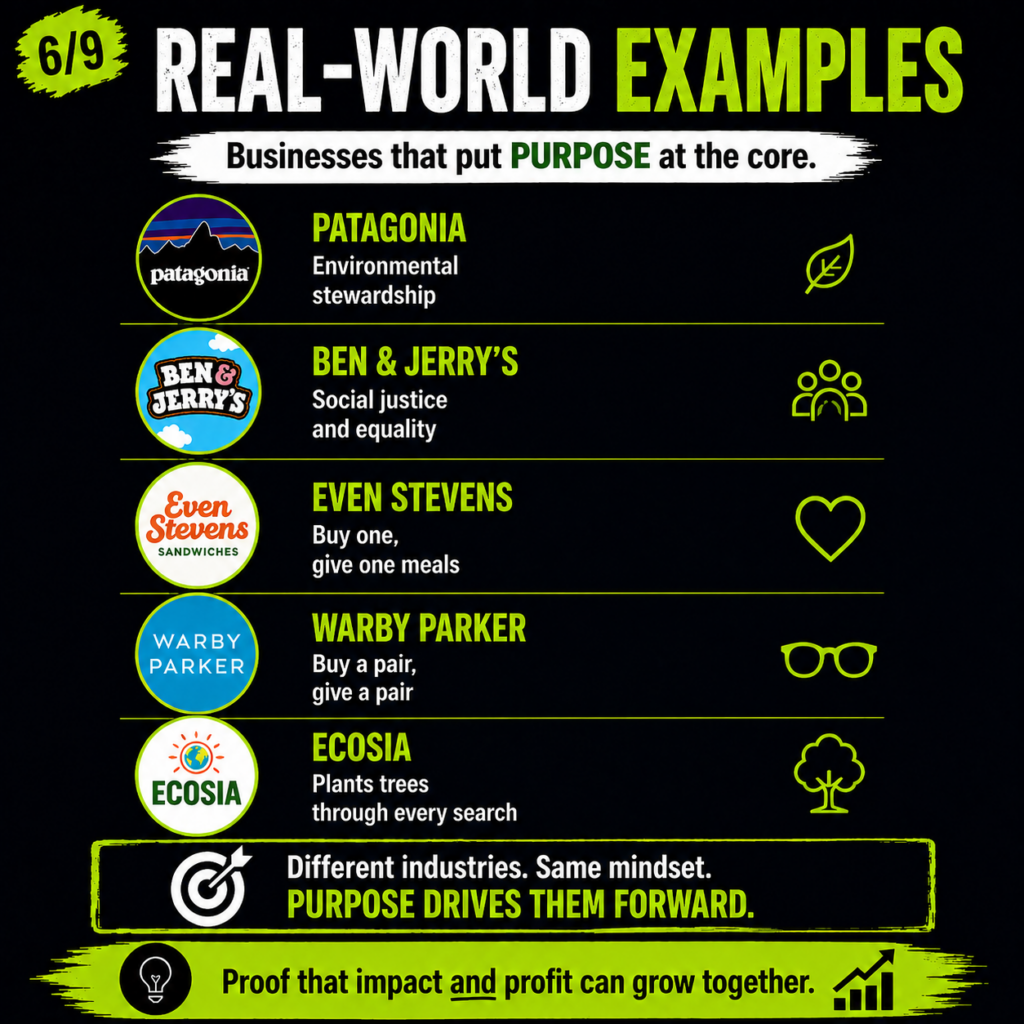
We’re already seeing early versions of this everywhere.
Companies that:
- Build environmental impact into their model
- Tie revenue directly to social outcomes
- Align long-term growth with real-world solutions
Even small, local businesses—like Even Stevens Sandwiches—show how this works in practice:
Buy one, give one meals built into the model.
That’s not charity.
That’s design.
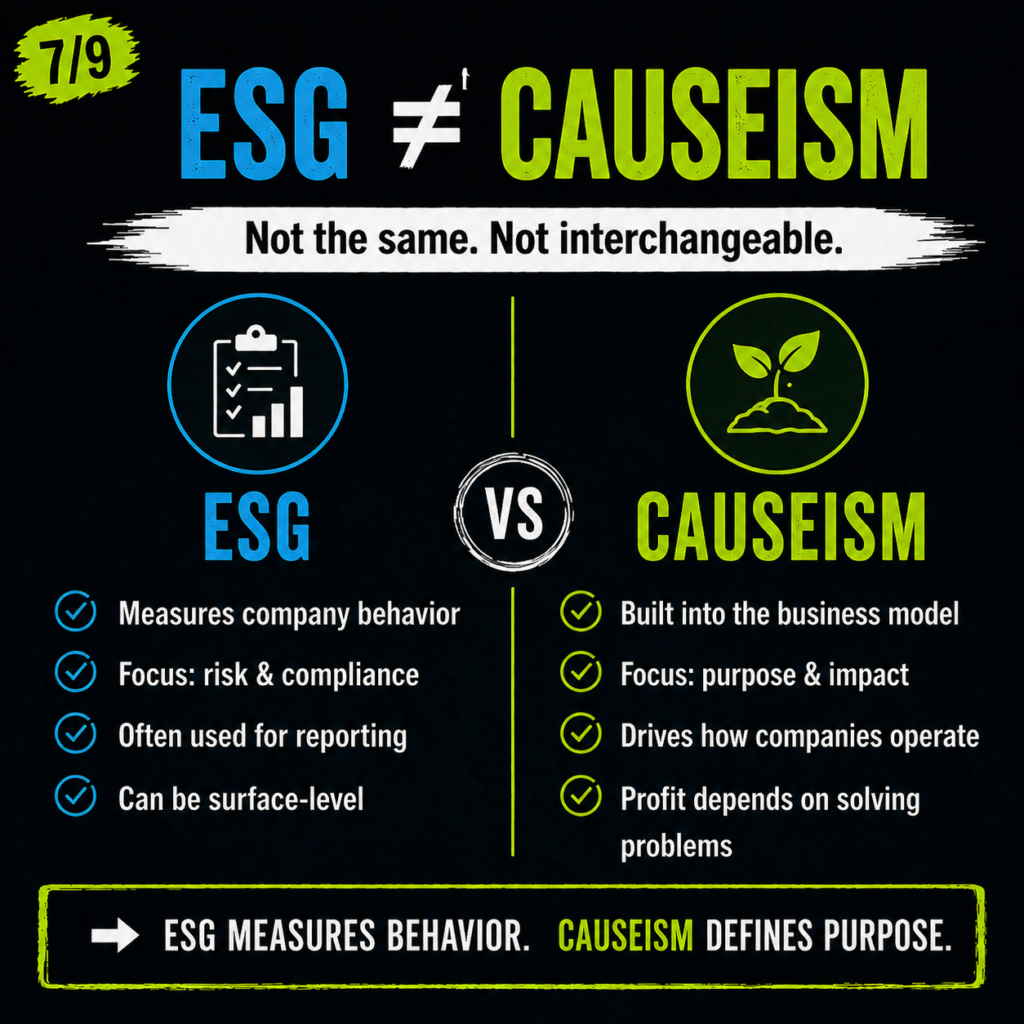
ESG Isn’t the Same Thing
A lot of people confuse this shift with ESG.
But they’re not the same.
- ESG measures behavior
- Causeism defines purpose
One is about evaluation.
The other is about how the system is built from the start.
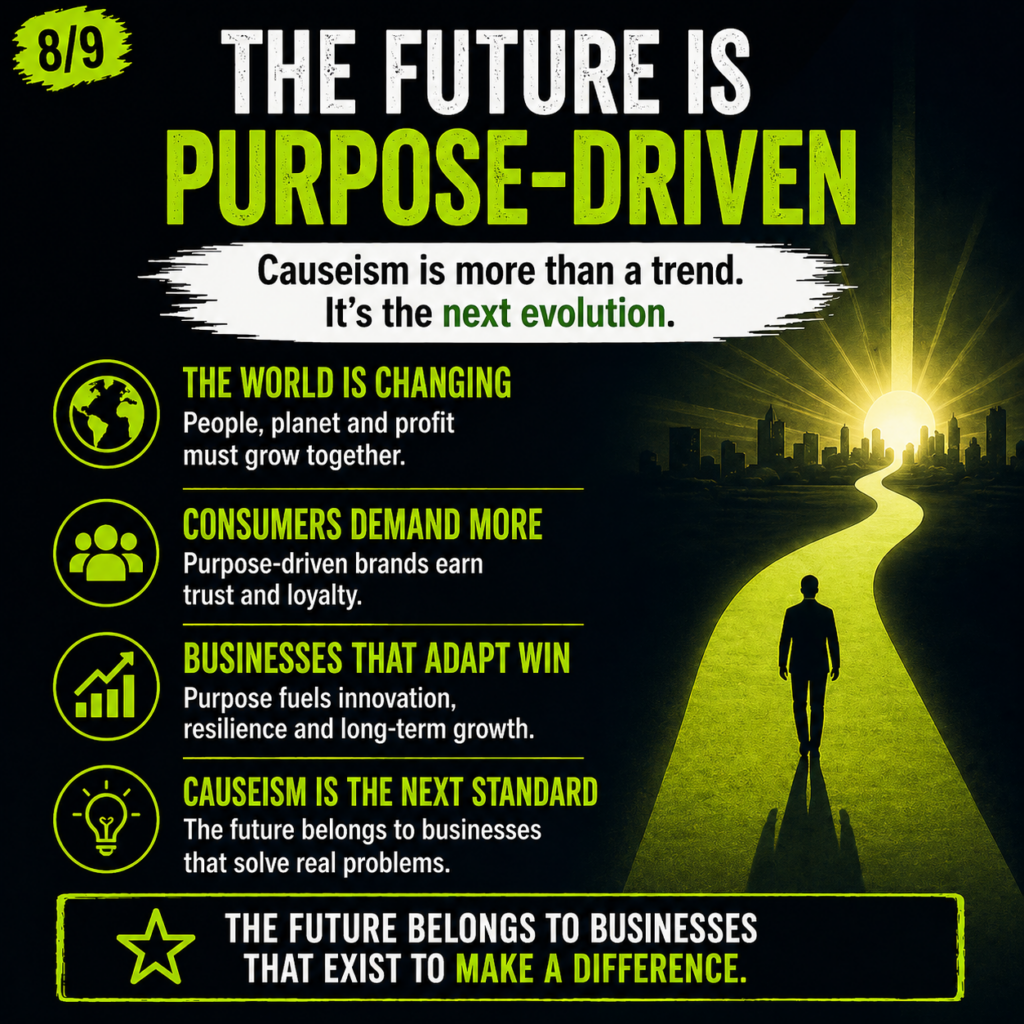
Why This Matters Now
This shift isn’t happening randomly.
It’s being driven by:
- Consumers demanding more from businesses
- Investors looking beyond short-term returns
- Founders wanting to build something meaningful
The market itself is pushing toward purpose.
The Real Question
The question isn’t:
“Is capitalism good or bad?”
It’s:
What should the next version optimize for?
Efficiency alone isn’t enough anymore.
Neither is profit alone.
The next evolution has to answer a bigger challenge:
Can we build systems where impact and profit grow together?
Where I Stand
As Steve Down, I don’t see Causeism as a perfect answer yet.
But I do see it as a direction.
A way to rethink how we design businesses from the ground up.
Because if capitalism evolves the way it always has…
The next version won’t just create wealth.
It will create meaning.
Final Thought
Business is one of the most powerful forces in the world.
The question is no longer:
“How much can we make?”
It’s:
“What are we building—and why?”
Explore the Visual Breakdown
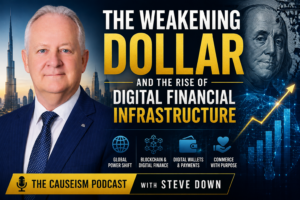
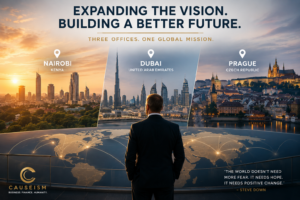
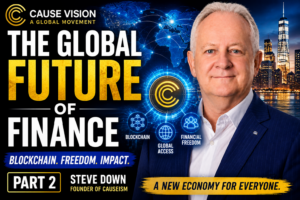
Scroll through the carousel above to see a simple breakdown of:
- How capitalism evolved
- Where it’s heading
- And what Causeism looks like in practice